
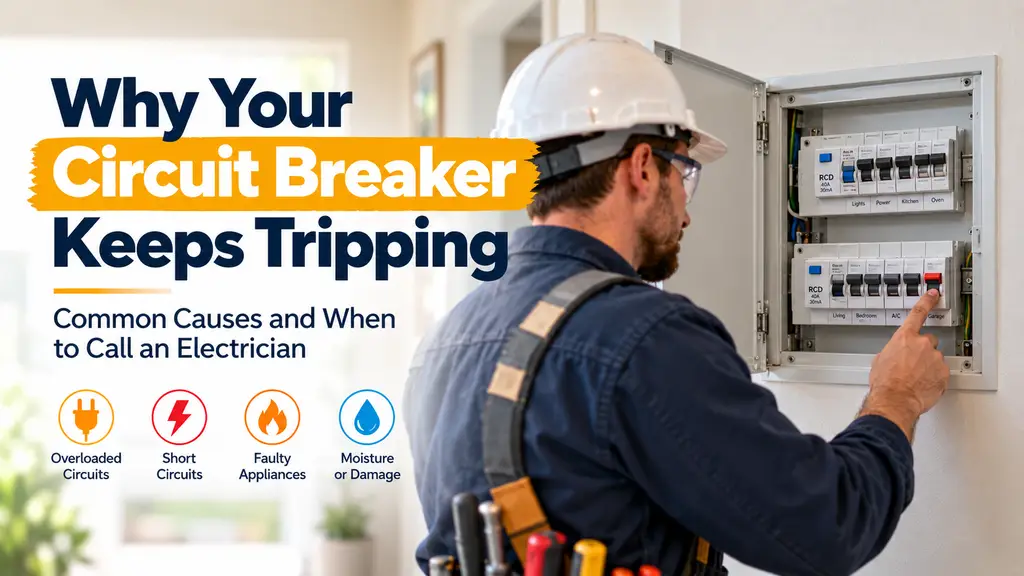
A circuit breaker that keeps tripping can be frustrating, especially when it interrupts your daily routine. While resetting the breaker may restore power temporarily, repeated trips are often a sign of an underlying electrical issue that shouldn’t be ignored.
At DCW Electrical, we help homeowners and businesses diagnose electrical faults safely and efficiently. In this guide, we’ll explain why circuit breakers trip, what you can check yourself, and when it’s time to call a licensed electrician.
What Is a Circuit Breaker?
A circuit breaker is a safety device designed to protect your electrical system. When it detects an overload, short circuit, or electrical fault, it automatically switches off the power to prevent damage to your wiring, appliances, and property.
Unlike old-style ceramic fuses, modern circuit breakers can simply be reset once the issue has been resolved.
If your breaker trips repeatedly, it’s doing exactly what it was designed to do, protect your home from potentially dangerous electrical problems.
Common Reasons Your Circuit Breaker Keeps Tripping
1. Overloaded Circuits
One of the most common reasons for a tripping breaker is an overloaded circuit.
This happens when too many appliances are drawing power from the same circuit at the same time.
Examples include:
- Running the kettle, microwave, toaster, and coffee machine together.
- Multiple heaters operating on one circuit during winter.
- High-powered tools in the garage.
- Air conditioners combined with other large appliances.
If your breaker only trips when several appliances are in use, your circuit may simply be overloaded.
2. Faulty Appliances
Sometimes the issue isn’t your home’s wiring, it’s an appliance.
Damaged appliances can develop internal electrical faults that immediately trip the breaker when plugged in.
Common offenders include:
- Old kettles
- Washing machines
- Dishwashers
- Portable heaters
- Power tools
- Refrigerators
Try unplugging recently used appliances before resetting the breaker. If the breaker stays on, one of those appliances may require repair or replacement.
3. Short Circuits
A short circuit occurs when an active wire comes into contact with another conductor or an earth connection.
Short circuits can:
- Cause breakers to trip instantly.
- Produce burning smells.
- Create sparks.
- Damage electrical equipment.
- Increase the risk of electrical fires.
Because short circuits involve damaged wiring, they should always be inspected by a licensed electrician.
4. Earth Leakage Faults
Modern homes are fitted with safety switches (RCDs) that detect electricity leaking to earth.
This leakage may occur due to:
- Water entering electrical equipment.
- Damaged extension leads.
- Faulty outdoor lighting.
- Defective appliances.
- Damaged electrical cables.
If your safety switch continues to trip, it’s important to have the fault professionally located before restoring power.
5. Ageing Electrical Wiring
Older homes often have wiring that has deteriorated over time.
Signs of ageing wiring include:
- Flickering lights.
- Warm power points.
- Burning smells.
- Frequently tripping breakers.
- Buzzing sounds from switches.
If your property is more than 25 years old and has never been rewired or upgraded, an electrical inspection is recommended.
6. Storm or Weather Damage
Heavy rain, strong winds, and lightning can damage outdoor electrical components.
Possible issues include:
- Moisture entering outdoor power points.
- Water-damaged switchboards.
- Fallen branches damaging overhead cables.
- Surge-related electrical faults.
If your breaker begins tripping after severe weather, avoid repeated resets and arrange an inspection.
Should You Keep Resetting the Breaker?
Resetting a breaker once is generally fine if the cause is obvious, such as using too many appliances at once.
However, if it continues to trip:
- Don’t force it back on repeatedly.
- Unplug connected appliances.
- Check for obvious signs of damage.
- Contact a licensed electrician if the problem persists.
Repeatedly resetting a breaker without identifying the cause can place unnecessary stress on your electrical system and may allow a serious fault to go unnoticed.
Warning Signs You Should Never Ignore
Contact an electrician immediately if you notice:
- A burning smell from the switchboard.
- Smoke or scorch marks.
- Buzzing sounds.
- Hot power points.
- Sparking switches.
- Breakers that won’t reset.
- Electric shocks when touching appliances.
These symptoms may indicate a dangerous electrical fault requiring urgent attention.
How DCW Electrical Diagnoses Electrical Faults
When you contact DCW Electrical, our electricians carry out a systematic fault-finding process to identify the source of the problem.
Our service includes:
- Testing circuit breakers.
- Inspecting wiring.
- Checking power points and switches.
- Testing appliances where required.
- Assessing switchboard condition.
- Providing clear recommendations before any repairs are completed.
Our goal is to restore your electrical system safely while preventing future problems.
Preventing Future Circuit Breaker Trips
You can reduce the likelihood of electrical issues by:
- Avoiding overloading power boards.
- Replacing damaged extension leads.
- Scheduling regular electrical safety inspections.
- Upgrading old switchboards.
- Having faulty appliances repaired promptly.
- Using licensed electricians for all electrical work.
Preventative maintenance is often far less expensive than emergency repairs.
Frequently Asked Questions
Is it dangerous if my circuit breaker keeps tripping?
Yes. While the breaker is protecting your home, repeated trips usually indicate an underlying issue that should be investigated by a licensed electrician.
Can a faulty appliance trip a circuit breaker?
Absolutely. Faulty appliances are one of the most common causes of circuit breaker trips and can usually be identified through electrical testing.
Should I replace my circuit breaker myself?
No. Electrical work should only be carried out by a licensed electrician. Attempting DIY electrical repairs is unsafe and may be illegal under Australian regulations.
How often should my home’s electrical system be inspected?
It’s recommended that older homes, renovated properties, and homes with recurring electrical issues have periodic electrical safety inspections performed by a qualified electrician.
☎️ Contact DCW Electrical Today
If your circuit breaker keeps tripping, don’t ignore the warning signs. The experienced team at DCW Electrical provides professional fault finding, switchboard inspections, electrical repairs, and safety upgrades for residential and commercial properties.
Whether it’s a faulty appliance, ageing wiring, or a switchboard issue, we’ll identify the problem and provide a safe, reliable solution to keep your electrical system operating at its best.
📞 Call DCW Electrical and Plumbing now: 03 8488 6630 | 0433 560 060
📍 13 Zinc Circuit, Cranbourne North VIC 3977 – Local, licensed, and ready to help!
Visit: https://dcwelectrical.com.au/
Stay safe, stay powered, and trust DCW Electrical for all your home electrical needs.